

The PTE Describe Image Process question can look difficult when the diagram contains several stages, arrows, labels, or connected steps. However, there is no need to explain every small detail. A clear structure, suitable linking words, and accurate process vocabulary can make the response much easier to organise.
In this task, the main goal of PTE Describe Image Process is to explain what the image shows in a clear and logical order. Instead of memorising a long answer, focus on identifying the beginning, the main stages, and the final result.
This guide explains how to describe a PTE process diagram with simple templates, useful vocabulary, and sample answers.
A process diagram shows how something happens from one stage to another. It may describe a natural process, a manufacturing system, a recycling method, a production cycle, or the movement of a product or material.
Types of PTE Describe Image Process Diagrams
Before writing, examine the diagram carefully and identify the type of process.
1. Life Cycle Process
A life cycle describes a natural or biological process that usually repeats continuously.
ExampleL The life cycle of a butterfly.
2. Linear Process
A linear process shows a series of stages from beginning to end.
Stage 1 → Stage 2 → Stage 3 → Stage 4 → Final Stage
3. Recycling Process
A recycling process explains how a material is collected, processed, and used again.
Collection → Sorting → Processing → Production → Reuse
4. Cyclical Process
A cyclical process shows stages that repeat continuously, with the final stage eventually returning to the beginning.
PTE Describe Image Process Vocabulary
Using accurate vocabulary helps you explain the process clearly.
Equipment Words for PTE Describe Image Process
- drum
- container
- funnel
- pipe
- mixer
- crusher
- mould
- conveyor belt
Materials Used in Process Diagrams
- raw materials
- ingredients
- components
- mixture
- substances
- materials
Manufacturing Actions
- crushing
- mixing
- heating
- cooling
- grinding
- filtering
- separating
- sorting
- packaging
- transporting
Final Product
- output
- final product
- finished product
- end product
- resulting product
Examples:
The process starts when workers place the raw materials into a crusher before transferring them to the mixer.
The mixture is poured into a mould to form the required shape.
The final product is then packaged and transported to shops.
PTE Describe Image Process Verbs
Choose verbs according to the action shown in the diagram.
Movement and Flow
- flow
- move through
- enter
- leave
- pass through
- transfer
- transport
Change and Transformation
- change into
- become
- convert into
- transform into
- produce
- form
- process
Mixing and Combining
- mix
- blend
- combine
- join
- add
- stir
Linking Words
Use linking words to show the order of the stages.
Beginning: Initially, At first, First, To begin with
Middle: Next, Then, After that, Following this, Subsequently
Ending: Finally, Eventually, In the final stage, At the end
Example:
Initially, the raw materials are collected and sorted. Next, they are transferred to a mixer. Following this, the mixture is heated. Finally, the finished product is packaged.
Active and Passive Voice for PTE Describe Image Process
Both active and passive voice can be used in IELTS Process Diagram writing.
Active:
The machine crushes the limestone.
Passive:
The limestone is crushed into a fine powder.
Passive voice is particularly useful when the action is more important than the person or machine performing it. However, avoid using passive voice in every sentence.
PTE Describe Image Process Vocabulary
Use vocabulary that matches the process.
Manufacturing: raw materials, components, mixture, finished product
Food production: ingredients, mixture, food product, preparation
Equipment: mixer, crusher, drum, funnel, pipe, conveyor belt
For example, ingredients is more suitable for food production, while raw materials is more appropriate for industrial manufacturing.
If you are preparing for IELTS as well, this PTE Describe Image vocabulary words can also help you understand how to organize information for an IELTS Writing Task 1 Process Diagram. Learn more with our complete guide to IELTS Task 1 Process Diagram strategies, structure, and useful vocabulary.
PTE Describe Image Process Structure
A well-organised answer normally contains four paragraphs:
- Introduction – Paraphrase the question.
- Overview – Summarise the main stages and beginning/end points.
- Body Paragraph 1 – Describe the first, second and third of the process.
- Body Paragraph 2 – Describe the remaining stages.
The key is to describe the stages in the correct order using clear vocabulary and appropriate linking words.
Question 1: In this task, you will see an image such as a graph, chart, map, diagram, or picture. You have 25 seconds to prepare and then 40 seconds to speak about it. Your goal is not to explain everything, but to give a clear and structured description.
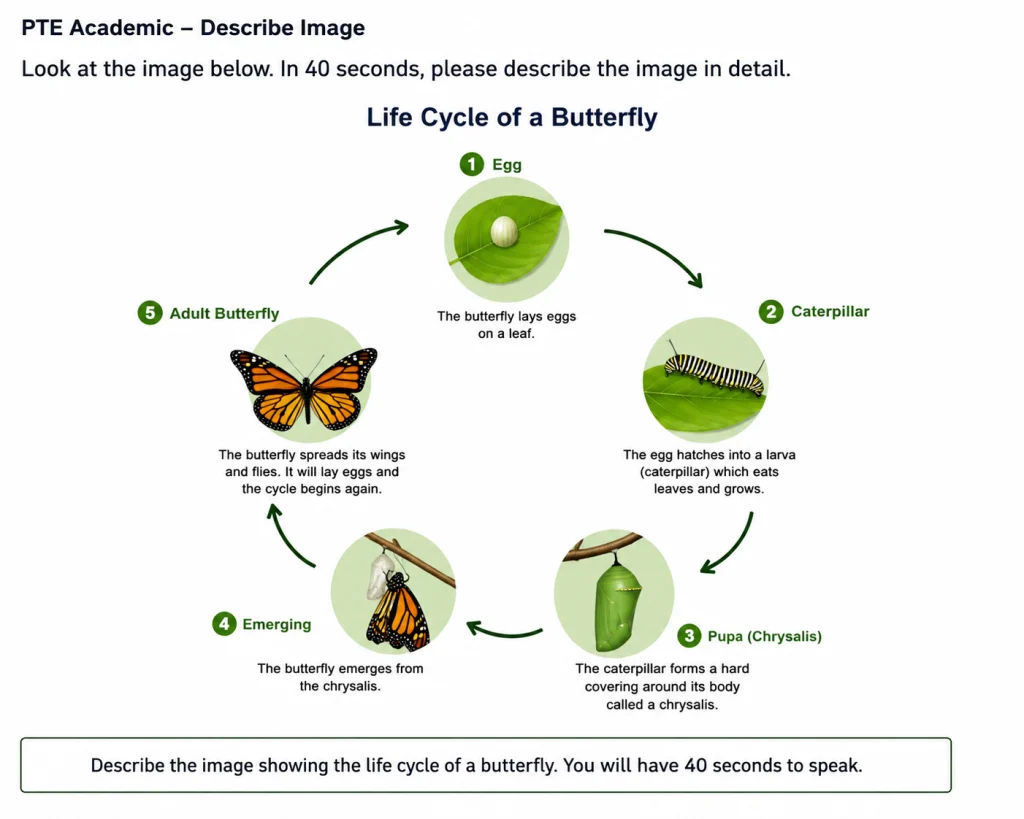
PTE Speaking Model Answer
- The diagram illustrates the process of [topic], which consists of several stages.
- The process begins when [first stage].
- In the next stage, [second stage]. Following this, [third stage]. Subsequently, [fourth stage].
- In the final stage, [last stage], after which [result / the cycle begins again].
- Overall, the diagram shows a series of stages through which [main subject] develops / changes / is produced.
Question 2: In this task, you will see an image such as a graph, chart, map, diagram, or picture. You have 25 seconds to prepare and then 40 seconds to speak about it. Your goal is not to explain everything, but to give a clear and structured description.
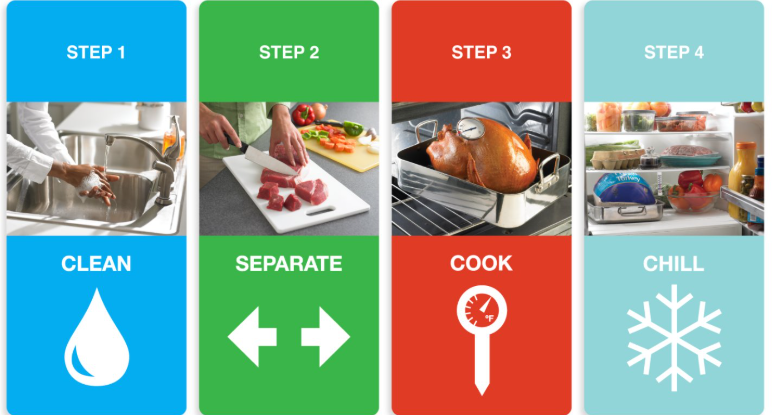
PTE Speaking Model Answer
- The diagram illustrates the process of [food preparation / food safety / cooking].
- Initially, [hand/food / ingredient] is [washed / cleaned / prepared] before [next action].
- In the following stage, [ingredient] is [cut / chopped / mixed / separated] using [equipment].
- After that, [food] is [cooked / heated / processed] at [temperature / location], if shown.
- Finally, the prepared food is [stored / served / refrigerated] to [purpose].
- Overall, the diagram shows the main steps involved in preparing and safely handling food.
Question 3: In this task, you will see an image such as a graph, chart, map, diagram, or picture. You have 25 seconds to prepare and then 40 seconds to speak about it. Your goal is not to explain everything, but to give a clear and structured description.
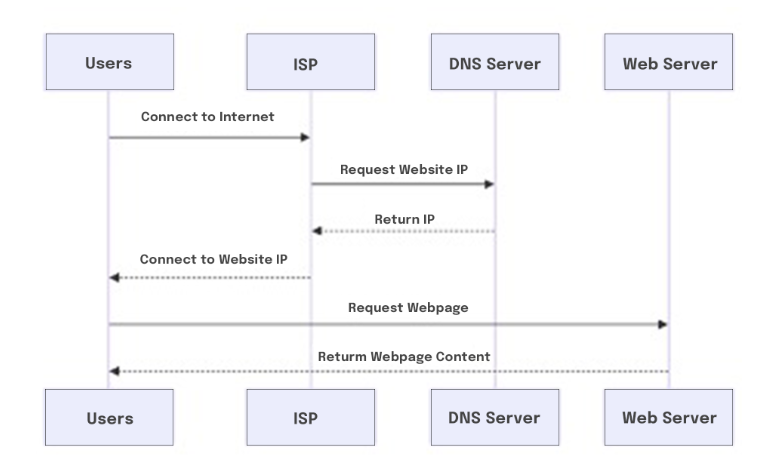
PTE Speaking Model Answer
- The flow chart illustrates how ——————————-.
- At the top of the image, we can see four main sections including —–, —–, ——, and ——.
- Moving forward, the users connect to the internet, requesting the website IP address, and —————–.
- Moving backward, the DNS server returns the IP address to the user. Using this IP address, the user connects to the website and requests the webpage. Finally, the web server returns the webpage content to the user.
- In conclusion, the flow diagram is clear, well-organized, and informative, explaining how users —————————-.
Question 4: In this task, you will see an image such as a graph, chart, map, diagram, or picture. You have 25 seconds to prepare and then 40 seconds to speak about it. Your goal is not to explain everything, but to give a clear and structured description.
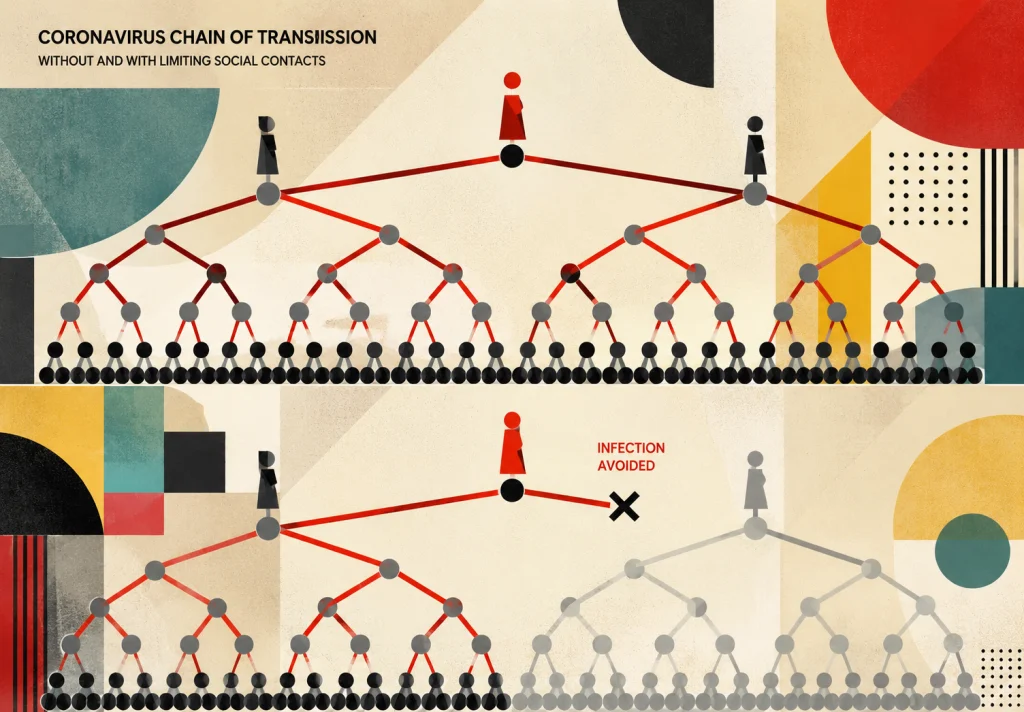
PTE Speaking Model Answer
- The diagram compares ———————————————.
- In the first section, [describe the main situation]. This results in / leads to [effect].
- In contrast, the second section shows [different situation]. As a result, [effect].
- The main difference between the two sections is that [key difference].
- Overall, the diagram demonstrates that [main message / relationship].
Question 5: In this task, you will see an image such as a graph, chart, map, diagram, or picture. You have 25 seconds to prepare and then 40 seconds to speak about it. Your goal is not to explain everything, but to give a clear and structured description.
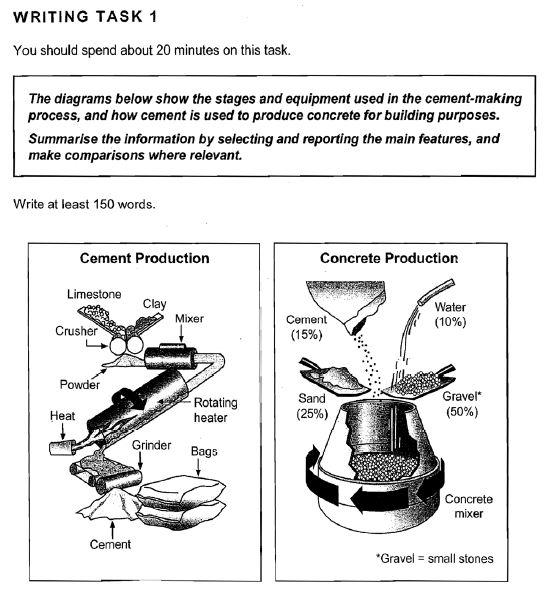
PTE Speaking Model Answer
- The process diagram illustrates information about ————– and —————.
- In the first stage, ——— and ——– are mixed into a crusher to create ———-. In the second stage, the fine powder is send to ————-, and moved to ——————.
- In the third stage, heat is applied to extract ——-, which travels to grinder machine to produce ————–.
- Concrete production uses ——————————————-. All the ———— are blended in a concrete mixer to produce concrete for ——————-.
Question 6: In this task, you will see an image such as a graph, chart, map, diagram, or picture. You have 25 seconds to prepare and then 40 seconds to speak about it. Your goal is not to explain everything, but to give a clear and structured description.
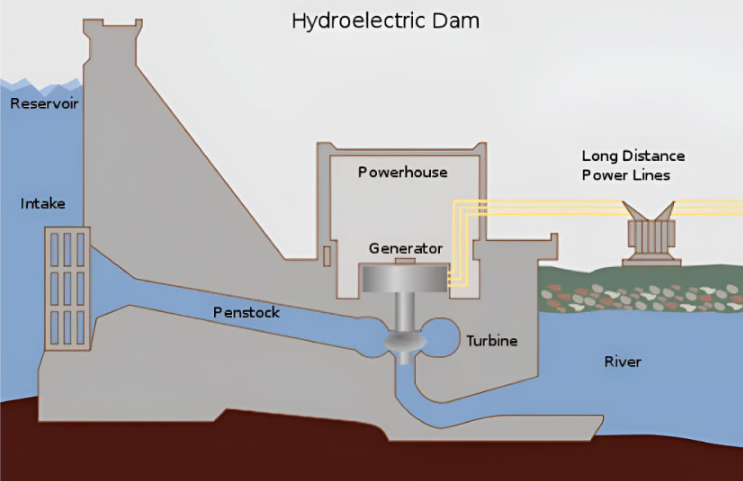
PTE Speaking Model Answer
- The diagram illustrates ————- and the process of generating electricity.
- Initially, water is stored in the ————- and flows through the ——– into the ——–.
- Moving forward, the water reaches the ——–, causing it to rotate. The turbine then powers the ——— inside the ———-.
- After that, electricity is produced and transmitted through ———-.
- Finally, the water flows into the ———.
- Overall, the diagram clearly shows how ————————————–.
Question 7: In this task, you will see an image such as a graph, chart, map, diagram, or picture. You have 25 seconds to prepare and then 40 seconds to speak about it. Your goal is not to explain everything, but to give a clear and structured description.
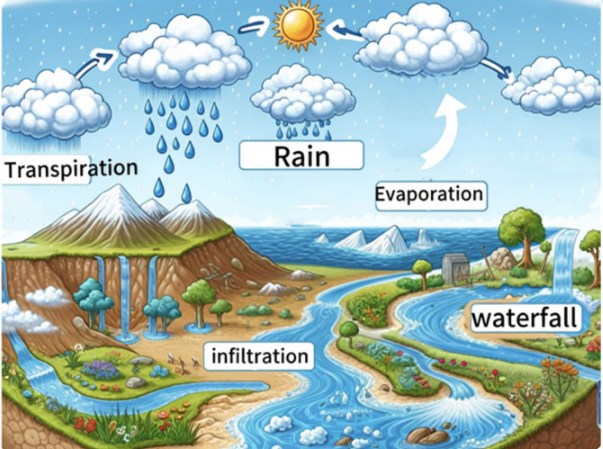
PTE Speaking Model Answer
- The diagram illustrates the water cycle and the movement of water in nature.
- Initially, water is heated by the sun and rises into the atmosphere through evaporation.
- Moving forward, water vapour forms clouds and returns to the ground as rain. Then, some water enters the soil through infiltration, while the remaining water flows through rivers and streams.
- In addition, water falls from higher areas as a waterfall. Finally, water returns to the sea, and the cycle continues through evaporation and transpiration.
- Overall, the diagram clearly shows the continuous water cycle.